

Island Wildlife
"The love for all living creatures is the most noble attribute of man." —Charles Darwin
organized by the four habitats: Dune, Maritime Forest, Salt marsh, and Freshwater Lagoons
• Ocean/Beach/Dune •
Spinner Sharks Carcharhinus brevipinna Spinner sharks are a fast-swimming species of shark which often jumps out of the water. The reason for their “spinning” or spiral motion is the way in which they catch their prey. Climbing quickly within a shoal of fish, they snap on all sides while turning. Then they leap through the water’s surface, making no attempt to slow down before reaching the top.
Spinner sharks are large and slender and have a pointed snout. The first dorsal fin is relatively small and begins at the same height as the end of the pectoral fin or slightly behind it. Spinner sharks have no interdorsal ridge.
Their back is gray-bronze and their belly is white, and they have a thin white band along their flanks. Very noticeable are the black tips on both dorsal fins, pectoral and anal fins, as well as the lower lobus of the tail fin. Individuals smaller than 70 cm have no dark markings.
Spinner sharks have a wide range and make seasonal migrations. They are found almost worldwide over the continental shelf, preferring shallow waters (less than 30 meters), but have also been seen in depths of approximately 75 meters.
Their average length is approximately 195 cm at a weight of 56 kg. The longest spinner shark found to date measured 278 cm.
They feed mainly on fish, preferring swarm fish such as sardines or herring. However, their food spectrum is very wide and also include tuna, grunt fish, lizard fish, etc., as well as mollusks, small sharks and rays.
Spinner sharks are viviparous and have a yolk sac placenta. They bear between 3 and 15 pups which measure between 60 and 75 cm at birth. Their gestation period is 12 to 15 months and the time of birth varies depending on the location: the summer months for animals in Senegal, Spring and early Summer in Florida and the Gulf of Mexico. The young pups are born in coastal regions and grow quickly.
The spinner shark resembles several other shark species which are mostly only identifiable by specialists. The striking black coloring of the anal fins is, however, one clear characteristic recognizable in larger animals. This species is usually mistaken for the blacktip shark (Carcharhinus limbatus) which, however, contrary to the spinner sharks has a white anal fin with no black tip.
There have been no reports on accidents with humans and h spinner sharks.
Ghost Crab (Ocypode quadrata) – Head out onto the beach any summer evening, and you’re bound to see something scurry across the beach and disappear! Ghost crabs, aptly named for their whitish appearance and quickness along the sand, live in burrows that they dig in the upper reaches of the beach. Although they appear to be terrestrial crabs, they are still tied very closely to the ocean. Ghost crabs have gills, which means they must get to the water several times a day in order to keep their gills wet and oxygenated.
Their square carapace is not very thick, nor or their pincers super strong, so the ghost crab must rely more on their protective coloration and quickness in order to avoid becoming lunch for a seagull or raccoon. Ghost crabs feed on mole crabs, beach fleas, coquina clams, and sea turtle hatchlings. They have eyes that sit up on stalks, which can rotate 360 degrees, making them quite difficult to sneak up on!

Mole Crab (Emerita talpoida) – Mole crabs are small, oval shaped crustaceans that have tan/gray coloration and are found in the surf zone on the beach. As waves recede, they quickly bury themselves in the sand so as not to be gobbled up by a bird or swept out to sea and eaten by a fish! Once buried, they stick their feathery antennae up through the sand so they can trap tiny plankton and food particles brought back by the wave. Several animals prey upon mole crabs, including other crabs, shorebirds and fish.

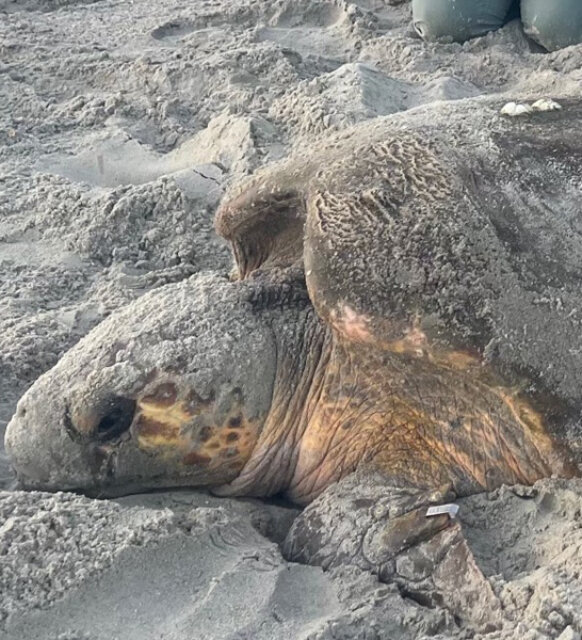
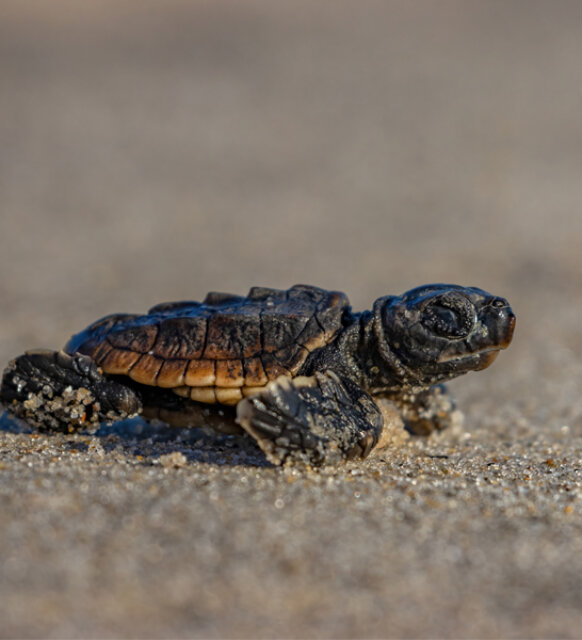
Loggerhead Sea Turtle(Caretta caretta) – Loggerhead sea turtles, a threatened species and protected by the Endangered Species Act, are the most commonly found turtle nesting on Bald Head’s beaches. In recent years, the island has averaged about 77 nests. Loggerheads are carnivores and feed primarily on crabs, lobsters, fish and shrimp. Adult turtles can attain weights of 300-350 pounds and reach 3-4 feet in length. It is thought they do not reach sexual maturity until about 20 years of age and live about 80-100 years. Most sea turtles nest every 2-3 years, and in North Carolina, the nesting season is May-October. Females lay their clutches of eggs (usually 4-5 clutches per season) from May-August, depositing approximately 120 eggs each time.

Bottlenose Dolphin (Tursiops truncatus) If you spend any time along the beach, you are bound to catch a glimpse of our resident bottlenose dolphins frolicking about in the surf. Or, you may even be lucky enough to see one on the ferry ride over to the island. Bottlenose dolphins can be seen year-round in the surrounding waters, with large numbers seen especially in the late summer and early fall. Their coloration is a type of camouflage known as countershading, which helps them to blend in with the environment. The dorsal (upper) side is a slate gray and the ventral (lower) side is whitish. When a predator is looking down at a dolphin from above, the gray color helps it to blend in with the dark water color. When looking up at a dolphin from below, the whitish belly blends in well with the light from the surface. In this area, dolphins feed on a variety of fish, squid and crustaceans. Often times they will work together to push fish into a tight ball, and then the dolphins will take turns charging through the school of fish to feed. They have also been known to “drive” fish against sand bars and shorelines, trapping them in shallow water, thus making capture that much easier. The Marine Mammal Protection Act protects bottlenose dolphins in United States waters.
Shorebirds
There are dozens of shorebirds that can be found along Bald Head Island’s beaches. Some of the most common birds include:

Brown Pelican

Laughing Gull

Royal Tern

Willet

Sanderling

Black Skimmer

Ruddy Turnstone
Some species nest on Bald Head Island and it is critical that their nesting sites be undisturbed. When the parents are forced off the nest, the eggs and hatchlings will die in the summer sun or another bird will have them for lunch. Should you see signs on the beach regarding colonial water bird nesting sites, please keep your distance and try not to disturb these beautiful birds.
Seashells and other cool marine organisms
One of the most popular beach pastimes is beachcombing. Every tide brings in something new, and you just never know what you’ll find! Low tide is the best time to look for shells and cool ocean critters. Here are some of the most commonly found shells and marine animals found along our beaches:
Shells:

Knobbed Whelk

Lightning Whelk

Channeled Whelk

Oyster

Quahog Clam

Jingle (Anomia simplex)
Ark
Angel Wing
Coquina
Other Cool Marine Organisms:
Sponges

Sea Whips

Sand Dollars
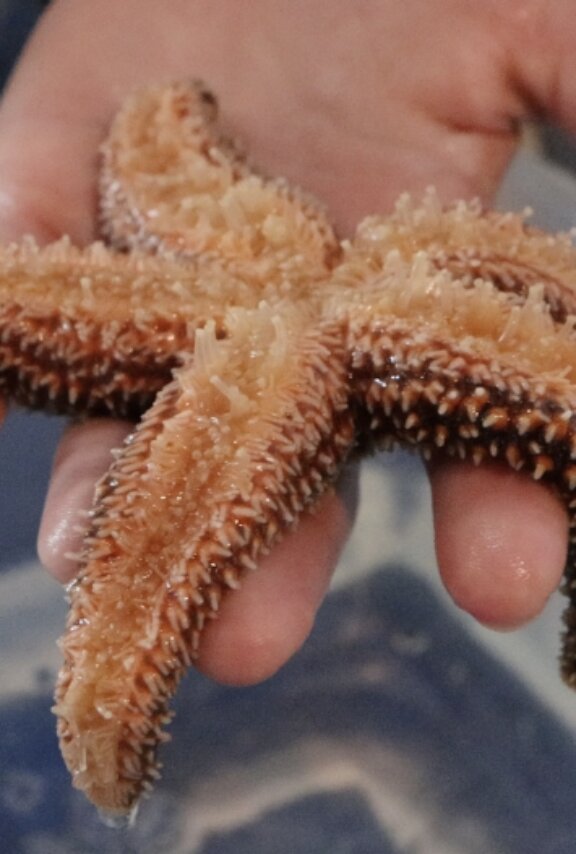
Sea Urchin
And the snake:

Black Racer (Coluber constrictor)
Description: Racers are large, relatively slender snakes known for their speed. They have rather large eyes, smooth scales, and in North Carolina are solid black as adults, although some have a whitish chin. As juveniles, racers are gray or brown with dark reddish-brown spots running along their backs.
Feeding/Diet: Racers do not constrict, but chase their prey down and swallow it alive. They eat a variety of animals, including small rodents, lizards, frogs, insects, and other snakes.
Activity/Behavior: They are active only during the daytime and have very good vision. When out and about, they are very alert and often hunt with their heads raised above the ground.
Habitat/Range: Black racers live in a variety of habitats, but are often found in somewhat open areas where they can bask in the sun.
Reproduction: During June or July, the black racer lays 4–31 eggs, which like its relative, the coachwhip, has small bumps like grains of salt all over its surface. Miscellaneous: Although they are often confused with the black rat snake, the black racer can be easily distinguished by their smooth scales. Although racers will often aggressively defend themselves and will usually bite repeatedly if picked up, they do not chase people as is often claimed. When pursued, they often climb into bushes or trees to escape their would-be captor. Though they are fast for a snake, a person can easily outrun one on open ground.
• Maritime Forest •

Raccoons Procyn lotor- Bandit-masked raccoons are a familiar sight just about everywhere, because they will eat just about anything. These ubiquitous mammals are found in forests, marshes, prairies, and even in cities. They are adaptable and use their dexterous front paws and long fingers to find and feast on a wide variety of fare.
In the natural world, raccoons snare a lot of their meals in the water. These nocturnal foragers use lightning-quick paws to grab crayfish, frogs, and other aquatic creatures. On land, they pluck mice and insects from their hiding places and raid nests for tasty eggs.
Raccoons also eat fruit and plants—including those grown in human gardens and farms. They will even open garbage cans to dine on the contents.
These ring-tailed animals are equally opportunistic when it comes to choosing a denning site. They may inhabit a tree hole, fallen log, or a house's attic. Females have one to seven cubs in early summer. The young raccoons often spend the first two months or so of their lives high in a tree hole. Later, mother and children move to the ground when the cubs begin to explore on their own.
opossums
gray squirrel
White tailed deer Odocoileus virginianus - White-tailed deer, the smallest members of the North American deer family, are found from southern Canada to South America. In the heat of summer they typically inhabit fields and meadows using clumps of broad-leaved and coniferous forests for shade. During the winter they generally keep to forests, preferring coniferous stands that provide shelter from the harsh elements.
Adult white-tails have reddish-brown coats in summer which fade to a duller grayish-brown in winter. Male deer, called bucks, are easily recognizable in the summer and fall by their prominent set of antlers, which are grown annually and fall off in the winter. Only the bucks grow antlers, which bear a number of tines, or sharp points. During the mating season, also called the rut, bucks fight over territory by using their antlers in sparring matches.
Female deer, called does, give birth to one to three young at a time, usually in May or June and after a gestation period of seven months. Young deer, called fawns, wear a reddish-brown coat with white spots that helps them blend in with the forest.
White-tailed deer are herbivores, leisurely grazing on most available plant foods. Their stomachs allow them to digest a varied diet, including leaves, twigs, fruits and nuts, grass, corn, alfalfa, and even lichens and other fungi. Occasionally venturing out in the daylight hours, white-tailed deer are primarily nocturnal or crepuscular, browsing mainly at dawn and dusk.
In the wild, white-tails, particularly the young, are preyed upon by bobcats, mountain lions, and coyotes. They use speed and agility to outrun predators, sprinting up to 30 miles (48 kilometers) per hour and leaping as high as 10 feet (3 meters) and as far as 30 feet (9 meters) in a single bound.
Red fox Vulpes vulpes-The red fox is the one of two types of foxes found in North Carolina.
The red fox is named for its reddish or orangish coloration. The tail, body and top of the head are all some shade of yellow-orange to reddish-orange. The undersides are light, and the tips of the ears and lower legs are black.
While rare in North Carolina, red foxes can occur in other color variations, such as black, silver, or a cross between red and silver, commonly known as a “cross fox." The tail is long (about 70 percent as long as the head and body length), bushy and has a white tip. Adults are the size of a small dog and weigh from 7.7 to 15.4 pounds.
Red foxes, like other wildlife species, prefer a diversity of habitats rather than large tracts of one habitat type. Preferred habitats include farmland, pastures, brushy fields and open forest stands. They frequently hunt the edges of these open habitats.
The red fox forages on a variety of prey, but mice, meadow voles and rabbits form the bulk of its diet. It will eat insects, birds, eggs, fruits and berries in spring, summer and fall. Since the red fox is also a scavenger, it may also eat carrion and garbage in some locations.
Gray fox Urocyon cinereoargenteus - The gray fox is slightly smaller than the red fox and is much darker in color. While gray foxes have a reddish hue on their neck and legs, their overall coloration is gray with a dark streak extending down the back and along the tail. The gray fox is the only fox native to North Carolina, and can climb trees, unlike the red fox. The red fox was brought to North Carolina from Europe by hunters during colonial times. The tail, body and top of the head are all the same shade of red, while its undersides are light and its legs and ears are tipped in black. The tail is long, bushy, and has a white tip.
Both foxes live throughout the entire state.
southern toads
tree frogs
snakes:
yellow rat
black racer
rough green
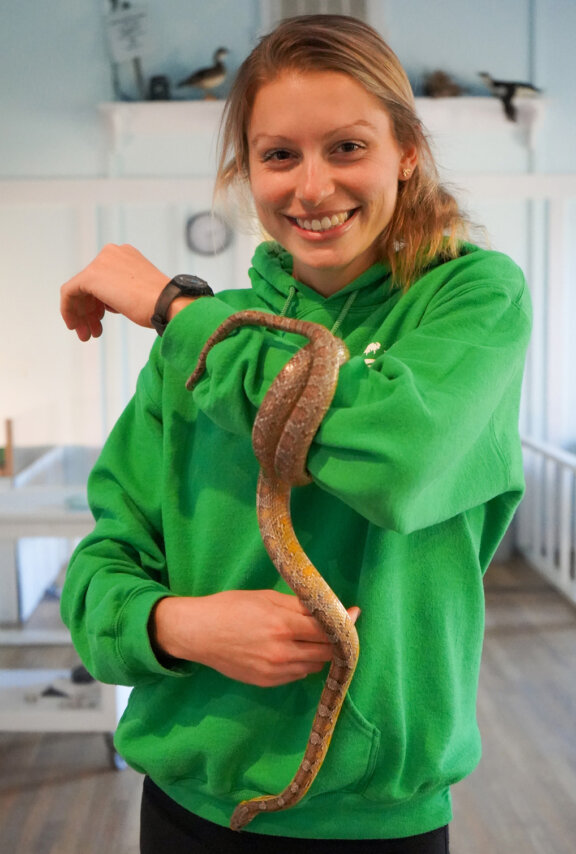
corn
• Salt marsh •
Mammals:
Deer
Raccoons
Foxes
bats
Birds:
Osprey (Pandion haliaetus) This is the only raptor that dives feet-first into the water to capture fish with its sharp talons. You can often see the large nests that ospreys built in the tops of tall trees or on platforms. Osprey are found along the entire east coast and typically live near rivers and lakes.
White Ibis (Eudocimus albus) Easily distinguished from other marsh birds by a long, curved, red bill and red legs. Rather than stalking its prey like egrets and herons do, ibis filter through the water and mud eating fish and invertebrates. White ibis are brown with a white belly and rump when immature, and adults are solid white with black wing tips. Approximately 7000-9000 ibis nest annually on Battery Island, an Audubon refuge in the Cape Fear River.
Snowy Egret (Egretta thula) The Snowy Egret is distinguished from the Great Egret by its black bill, yellow feet and smaller size. This smaller egret stalks its prey at the waters edge, and then stabs it repeatedly with its sharp beak.
Great Egret (Casmerodius albus) Similar in size and stature to the Great Blue Heron, this large all-white bird has a long yellow bill. The legs and feet of a Great Egret are black. When stalking prey, the Egret stretches out its long neck, but when flying, it folds its neck in.
Great Blue Heron (Ardea herodias) This majestic blue-gray bird stands approximately 4 feet tall and has a wingspan of 7 feet. Great Blues have white and black markings on the head and a yellowish bill. Herons are in the same family as the Egrets, and have a similar appearance and feeding behavior.
Little Blue Heron (Florida caerulea) The Little Blue Heron is a medium size heron colored slate blue with a maroon-brown neck. The bill is gray and the legs dark yellow. When immature, the Little Blue is white.
Tricolored Heron (Hydranassa tricolor) This species can often be confused with Little Blue Heron – distinguishing features include a white belly and rump and maroon-brown feathers on the lower back. Called a Tricolored Heron due to the blue, maroon and white colors that make this a beautiful member of the Heron family.
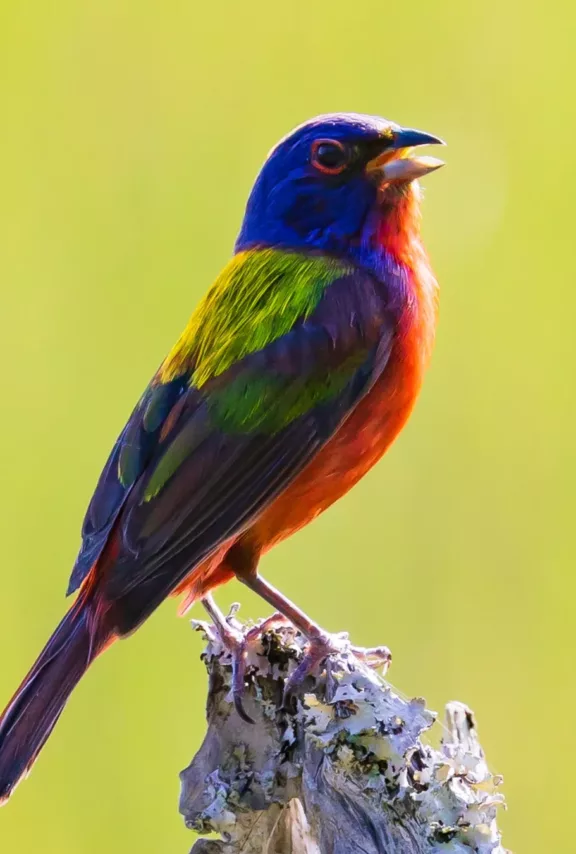
Painted Bunting (Passerina ciris) This brightly colored songbird migrates to our island each summer to nest. In the winter, the Painted Bunting migrates to places as far away as Mexico and Cuba. The males are brightly colored, while the females of this species are an olive-yellow. Males can often be heard singing from the tops of trees. There is a study being done on Bald Head Island with Painted Buntings by capturing, banding and then recapturing these birds. So if you are lucky enough to see a bunting, check the legs for colored bands!
Arthropods:
Fiddler Crabs (Several Species) These crabs grow to less than one inch and live in small burrows that they make in the mud. It is estimated that there are 1 million fiddler crabs per acre of salt marsh flats and mud banks. These crabs got their name from the males large front claw that they hoist up and wave around to attract females (looks like they are playing a fiddle). If you look closely during the spring and summer, you can see the males performing this courtship wave. Fiddler crabs hibernate in their burrows during the winter months.
Mollusks:
Marsh Periwinkle Snail (Littorina irrorata) There are several species of periwinkles, but the most common is the Marsh Periwinkle. This periwinkle is gray to white in color and moves up and down the Cordgrass as the tide flows in and out of the salt marsh. This herbivore grazes the Cordgrass eating algae and detritus. This snail serves as food for various birds, crabs and even humans.
Atlantic Ribbed Mussel
Oyster
Mussels
Clams
Juvenile Fish
Shrimp
Arachnids:
Black-and-Yellow Argiope (Argiope aurantia) Harmless spider that produces large webs along the trail. This spider is sometimes called the writing spider due to the thick zigzag webbing spun by the male in the center of the web. After the female lays her eggs she dies and the young over winter in the egg sac.
Reptiles:
Green Anole (Anolis carolinensis) This lizard is 5-8 inches long and is commonly seen on Bald Head Island. It is often incorrectly called a chameleon due to its color-changing abilities (found from a brown to green color). This ability allows the small lizard to camouflage itself and protect itself from predators. Anoles eat insects and live in the shrubs and trees. Anoles are not found any further north than North Carolina.
Rough Green Snake (Opheodrys aestivus) A slender dainty snake colored bright green above and pale yellow below. This snake has amazing climbing abilities and spends its life living in trees and shrubs. Crickets, spiders, grasshoppers and other insects are food for Rough Green Snakes.
Black Racer
Rat snake
Glass lizard
• Freshwater Lagoons •
American Alligator (Alligator mississippiensis) American Alligators are found from North Carolina to Texas. Direct descendents of dinosaurs, alligators have been on theearth for 230 million years. In North Carolina, females grow to 8 feet, males average size is 12feet, weighting 400-700 lbs. They feed on insects, fish, turtles, birds, and mammals. During winter months, alligators move to dens or deep holes,where they undergo periods of dormancy and may stop feeding. While alligators are not prone to approaching people, you shouldalways remain cautious near bodies of fresh water on Bald Head.Take measures to protect your children and pets, and remember thatit is against the law to feedan alligator.
Yellow-Bellied Sliders (Trachemys scripta) Yellow Bellied Sliders derive their name from the yellow color of their lower shell, and their tendency to slide into the water when danger approaches. They range in size from 5-12 inches, with females growing much larger than males. Males exhibit larger claws which they wave in the face of females in order to flirt with them. They feed on aquatic insects and vegetation. Many of the sliders in the overlook have been “marked,” meaning researchers etched markings into their shells which help them identify individual turtles. This research can help us learn more about the lives of this species, as well as the health of the ecosystem in which they are found.
Osprey (Pandion haliaetus) Osprey are commonly seen soaring overhead or sitting on their nests,which are located near the overlook. These agile birds of preycan swoop down with amazing accuracy pulling fish from the water with their talons.
Green Darter (Anax junius) Can be seen resting on grasses close to the ground, or flying in larger groups hunting for mosquitoes to feed on. This common species of dragonfly is found throughout the US.
Southern Toad (Bufo terresttris) Commonly seen around the edges of freshwater looking for insects and grubs. They can also be heardin the spring and summerattracting mates with a highpitched trill which could bemistaken for a cricket.
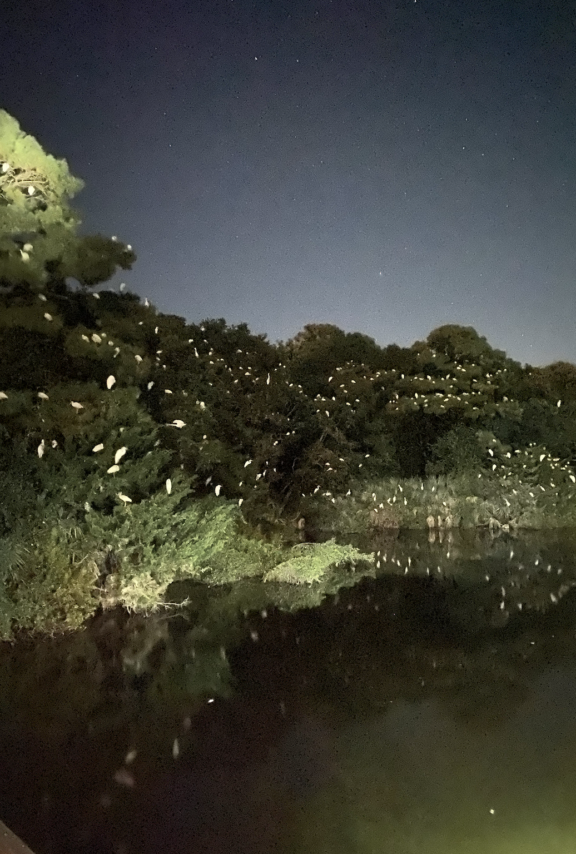
Black-Crowned Night Heron (Nycticorax nycticorax) Most active at dusk and during the night, they will stalk the edges of the marshes in search of fish and other small prey. They can be seen perching in trees on the edges of the water during the day.
• Mammals and Herp list of BHI •
| Amphibians |
| Green Treefrog |
| Squirrel Treefrog |
| Southern Leopard Frog |
|
Eastern Narrowmouth Toad Southern Toad |
| Mammals |
| White-footed mouse |
| Deer mouse |
| Cotton rat |
| Brown (Norway) rat |
| Gray squirrel |
| Eastern mole |
| Yellow bat |
| Red bat |
| Seminole bat |
| Opossum |
| Raccoon |
| River otter |
| Red fox |
| Gray fox |
| Coyote |
| Bobcat |
| White-tailed deer |
| Bottlenose dolphin |
| Reptiles |
| Yellow-bellied slider |
| Common snapping turtle |
| Eastern mud turtle |
| Diamondback terrapin |
| Eastern box turtle |
| Loggerhead sea turtle |
| Green sea turtle (rare nester) |
| Leatherback sea turtle (one time nester) |
| Kemp’s ridley sea turtle (offshore, foraging) |
| Green anole |
| Southeastern five-lined skink |
| Six-lined racerunner |
| Eastern glass lizard |
| Black racer |
| Yellow rat snake |
| Rough green snake |
| Scarlet snake |
| Corn snake |
| Banded water snake |
| Eastern coachwhip |
| Scarlet kingsnake |
| Southern copperhead |
| American alligator |
Birds documented on Bald head Island/Smith Island Complex
Red-Throated Loon
Common Loon
Pied-Billed Grebe
Horned Grebe
Red-necked Grebe
Eared Grebe
Northern Gannet
Brown Booby
Brown Pelican
White Pelican
Magnificent Frigatebird
Double-crested Cormorant
Anhinga
American Bittern
Great Blue Heron
Little Blue Heron
Tri-colored Heron
Great Egret
Snowy Egret
Cattle Egret
Reddish Egret
Green Heron
Black-crowned Night Heron
Yellow-crowned Night Heron
White Ibis
Glossy Ibis
Wood Stork
Tundra Swan
Canada Goose
Snow Goose
Brant
Wood Duck
Green-Winged Teal
Blue-winged Teal
American Black Duck
Mallard
Northern Shovele
Gadwall
American Wigeon
Redhead
Ring-necked Duck
Greater Scaup
Lesser Scaup
Black Scoter
Surf Scoter
White-wing Scoter
Common Eider
Bufflehead
Hooded Merganser
Red-breasted Merganser
Ruddy Duck
Turkey Vulture
Black Vulture
Osprey
Bald Eagle
Northern Harrier
Sharp-shinned Hawk
Cooper’s Hawk
Red-shouldered Hawk
Red-tailed Hawk
Rough-legged Hawk
Merlin
American Kestral
Peregrine Falcon
Black Rail
Clapper Rail
Virginia Rail
Sora Rail
Common Moorhen
American Coot
Sandhill Crane
Black-bellied Plover
Wilson’s Plover
Piping Plover
Semipalmated Plover
Killdeer
American Oystercatcher
Black-necked Stilt
Greater Yellowlegs
Lesser Yellowlegs
Willet
Solitary Sandpiper
Spotted Sandpiper
Whimbrel
Long-billed Curlew
Marbled Godwit
Ruddy Turnstone
Red Knot
Sanderling
Semi-palmated Sandpiper
Western Sandpiper
Least Sandpiper
Dunlin
Short-billed Dowitcher
Common Snipe
American Woodcock
Parasitic Jaeger
Laughing Gull
Bonaparte’s Gull
Ring-billed Gull
Herring Gull
Great Black-backed Gull
Lesser Black-backed Gull
Gull-billed Tern
Caspian Tern
Royal Tern
Sandwich Tern
Common Tern
Forster’s Tern
Least Tern
Sooty Tern
Bridled Tern
Black Tern
Black Skimmer
Dovekie
Rock Dove
Mourning Dove
White-winged Dove
Yellow-billed Cuckoo
Eastern Screech Owl
Great Horned Owl
Barred Owl
Short-eared Owl
Common Nighthawk
Whip-poor-will
Chuck-will’s-widow
Chimney Swift
Ruby-throated Hummingbird
Belted Kingfisher
Red-headed Woodpecker
Red-bellied Woodpecker
Yellow-bellied Sapsucker
Northern Flicker
Downy Woodpecker
Hairy Woodpecker
Pileated Woodpecker
Eastern Phoebe
Say’s Phoebe
Eastern Wood Pewee
Great Crested Flycatcher
Eastern Kingbird
Western Kingbird
Purple Martin
Tree Swallow
N. Rough-winged Swallow
Barn Swallow
Blue Jay
American Crow
Fish Crow
Carolina Chickadee
Red-breasted Nuthatch
White-breasted Nuthatch
Brown Creeper
House Wren
Carolina Wren
Winter Wren
Sedge Wren
Marsh Wren
Golden-crowned Kinglet
Ruby-crowned Kinglet
Blue-gray Gnatcatcher
American Robin
Swainson’s Thrush
Hermit Thrush
Northern Mockingbird
Gray Catbird
Brown Thrasher
Cedar Waxwing
Loggerhead Shrike
European Starling
White-eyed Vireo
Blue-headed Vireo
Red-eyed Vireo
Black-whiskered Vireo
Bay-breasted Warbler
Orange-crowned Warbler
Northern Parula
Magnolia Warbler
Cape May Warbler
Black-throated Blue Warbler
Prothonotary Warbler
Yellow Warbler
Chestnut-sided Warbler
Yellow-rumped Warbler
Blackburnian Warbler
Prairie Warbler
Palm Warbler
Yellow-throated Warbler
Pine Warbler
Blackpoll Warbler
Cerulean Warbler
Black-and-White Warbler
American Redstart
Worm-eating Warbler
Ovenbird
Northern Waterthrush
Louisiana Waterthrush
Kentucky Warbler
Connecticut Warbler
Common Yellowthroat
Hooded Warbler
Yellow-breasted Chat
Summer Tanager
Scarlet Tanager
Northern Cardinal
Rose-breasted Grosbeak
Blue Grosbeak
Indigo Bunting
Painted Bunting
Eastern Towhee
Chipping Sparrow
Lark Sparrow
Savannah Sparrow
Nelson’s Sparrow
Saltmarsh Sparrow
Seaside Sparrow
Fox Sparrow
Swamp Sparrow
Song Sparrow
White-throated Sparrow
White-crowned Sparrow
Field Sparrow
Dark-eyed Junco
Bobolink
Red-winged Blackbird
Rusty Blackbird
Eastern Meadowlark
Boat-tailed Grackle
Common Grackle
Brown-headed Cowbird
Baltimore Oriole
Orchard Oriole
House Finch
American Goldfinch
Red Phalarope (Phalaropus fulicaria)
Total Species: 236